
Free Consultations 630-407-1225

Category - Divorce

Am I Allowed to Date During My Divorce?

Posted on May 25, 2017 in Divorce
TwitterFacebookLinkedIn

dating, Wheaton family law attorneyDuring a divorce, the general advice from friends and experts is to avoid dating, especially if you have children. It can present a distraction from proceedings, and in some cases, can actually wind up affecting the asset distribution of your marital estate or your ability to receive spousal support. Even after your divorce is final, it is a good idea to tread carefully in terms of getting back on the proverbial horse.

Dating During Can Be Messy

There is no legal prohibition of dating during divorce proceedings. However, it is frowned upon, especially if there are children involved, because it can provoke strong feelings, especially if you are the one who instituted proceedings. To a hurting ex-spouse, dating so soon can seem like flaunting a new relationship in their face, and they may look to make you pay for it, so to speak. It is not uncommon to hear of soon-to-be ex-husbands and ex-wives deliberately drawing out proceedings or complicating asset division solely to inconvenience their spouse, even if it means they might pay more in attorney’s fees.

...

The Potential Impact of Divorce on Social Security

Posted on May 23, 2017 in Divorce
TwitterFacebookLinkedIn

social security, Wheaton divorce attorneyMore and more people are pursuing a divorce at relatively later stages of life for a variety of reasons. However, even if you are young, it is, nonetheless, a good idea to take steps to understand retirement accounts and Social Security payments, because one day, you may need to use them, divide them with your spouse or ex-spouse, or both. You can also ask an experienced attorney for assistance.

How Social Security Works

During one’s working lifetime, taxes are withheld from each paycheck, some of which are used to pay into Social Security. When that person reaches the appropriate age, that money is used to help support him or her, as a way of giving back what a person has put into the system. Because of this, a person’s eligibility for Social Security is based, among other factors, on how many “work units” they have worked over their lifetime. If one has accumulated 40 units—roughly 10 years’ worth of work, which does not have to be continuous—and he or she is over 62 years old, they are generally eligible to receive Social Security payments.

...

Considerations for Your Business in Divorce

Posted on May 16, 2017 in Divorce
TwitterFacebookLinkedIn

business, DuPage County divorce attorneyWhile many Americans work for large companies, more and more are starting their own businesses—and for a variety of reasons. However, taking on this responsibility can mean extra headaches if you and your spouse ever wind up in divorce court. A business is an asset—in most cases, a marital asset—and like any other property acquired during the marriage, it must be valued and apportioned in accordance with the law. It may not be necessary to divide the business itself, but some manner of arrangement must be made that is equitable to both spouses.

Equitable Distribution and Asset Division

When left to the court to decide, asset division in Illinois is governed by the principle of equitable distribution. In other words, the state’s policy in divorce cases is to divide all marital property as fairly as possible. This means that unlike in community property states, the marital assets will not necessarily be divided equally; instead, they will be divided in the fairest method possible. If one spouse makes significantly more than the other, for example, the higher-earner may receive fewer marital assets because they have the means and the capital to acquire more.

...

Dividing Valuable Assets in Divorce

Posted on May 09, 2017 in Divorce
TwitterFacebookLinkedIn

assets, DuPage County divorce attorneysWhen you and your spouse decide to get a divorce, one of the main things on your minds will likely be property division. Your marital assets will be divided equitably—fairly, not necessarily equally. However, there are disputes very often about the larger assets, such as houses, cars and recreational vehicles. While each case is different, if you understand the law surrounding asset division, you may stand a better chance of retaining the assets you wish to keep.
The Marital Home

The biggest asset for many is the marital home. Some couples simply agree as to its disposition; others fight bitterly. There are many different ways that you may be able to decide who gets the house or how to divide the equity in the home. One is referred to as ‘deferred distribution,’ where the home is held by one spouse until a significant event occurs—for example, any minor children reaching adulthood—and only then is sold. This can be advantageous, especially if you have children, because they still get to grow up in the place they know as their family home.

...

Are Frozen Embryos Marital Property?

Posted on April 13, 2017 in Divorce
TwitterFacebookLinkedIn

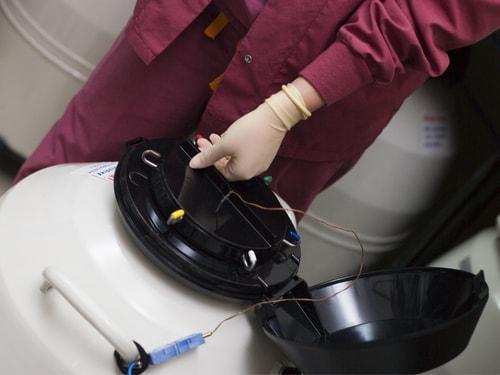
embryos, Wheaton family law attorneyOver the past few years, there have been a number of cases in which a divorcing couple disputes the owner of embryos originally intended for in vitro fertilization. Throughout our society, fertility issues and timing are becoming much more common concerns than in past generations. Understandably, this is an extremely personal topic, but it must be addressed because failure to do so may lead to a host of negative consequences for both spouses and certainly for any child born as a result.

Marital Property in Illinois

During an Illinois divorce, marital property is divided under the theory of equitable distribution, meaning that the marital estate is divided as equitably as possible—not necessarily equally. If, for example, one spouse has a significantly higher-paying job, they may receive fewer marital assets or lower spousal support in the divorce agreement, simply because they likely need it less. The concept of equity is interpreted to mean ensuring each spouse has the tools they need to maintain a comparable standard of living post-divorce.

...
Back to Top