
Recent Blog Posts
How Do Young Children and Adolescents Handle Their Parents’ Divorce?
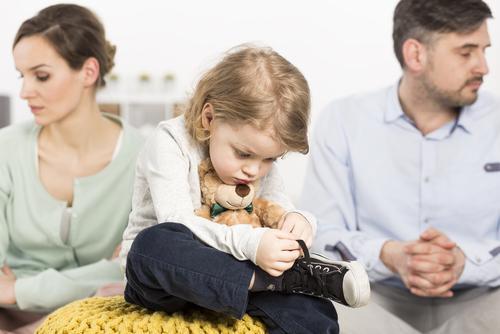 Whether heated debates over parenting time or disagreements about marital debts add fuel to an already stressful home environment, children caught in the middle of a divorce have plenty to contend with. Even if divorcing parents attempt to protect their children from conflict, the divorce process can be emotionally turbulent for them. Experts tell us that parental divorce has a significant impact on children of all ages, although younger children tend to process and react to the separation differently than older adolescents. These variations in behavioral changes can be alarming for parents, who themselves are feeling the emotional effects of such a big life change.
Behavioral Changes to Expect from Your Teen or Little One
When Is an Order of Protection Appropriate in a Family Law Case?
 Domestic violence is unfortunately a common reason as to why a person would seek a divorce and request assistance from the law. An order of protection may be obtained if an individual is fearful for his or her safety or well-being. If a person’s former spouse does not adhere to the terms of this type of court order, consequences such as fines and/or jail time could result.
What Is an Order of Protection?
In the state of Illinois, an order of protection is a civil court ruling that provides a safeguard for victims of domestic violence or other crimes. These protective orders can be procured on an emergency basis when an individual is likely to be the victim of injury or abuse. An order of protection falls under what is known as the Illinois Domestic Violence Act. This law offers protection to victims that are abused by a family or household member, which can include:
What Will a Judge Consider When Creating a Parenting Plan?
 The health and well-being of a couple’s child should always be a top priority when ending a relationship or going through a divorce. During this process, a parenting plan will be created to make decisions and establish rules that the parents should follow regarding issues such as the allocation of parental responsibilities and parenting time. Parents can save a lot of time and money by working together and addressing these matters prior to facing a judge. However, if a couple cannot come to an agreement, the judge will be required to make legally binding decisions that would reflect the best interests of the child.
Decision-making Responsibilities
Tips for a Successful Collaborative Divorce in Illinois
 While the divorce process can be difficult, some couples may be able to work together to end their marriage as amicably as possible. Collaborative divorce is an alternative dispute resolution process where spouses and their attorneys work together cooperatively to negotiate an equitable settlement. The focus is on problem-solving based on the couple’s individual and shared values without having to go to court. There are many benefits to a collaborative divorce, but it may not work for everyone. A couple needs to be willing to compromise on certain issues in order to make decisions without a judge getting involved.
Benefits of Collaborative Law
A collaborative divorce has many advantages, and the primary benefit is the ability to avoid going to court to resolve disputes through litigation. Some of the other benefits of using a collaborative form of divorce include:
Can Visitation Rights Be Granted to a Non-Parent in Illinois?
 Siblings, grandparents, great-grandparents, and stepparents can play a critical role in a child's development. Bonds formed between a child and his or her family members can produce memories that will be cherished for a lifetime. Sadly, in cases of divorce, or when other conflicts or disagreements arise between extended family members, one or both parents may decide to end a relationship between a child and his or her relatives. While divorce may bring out the worst in people, it is important to remember that a child's best interests should be protected throughout the process. If a parent’s actions have had a negative impact on the relationship between the child and other family members, grandparents or other relatives may wish to take legal action to ensure they can remain in a child’s life. In these cases, an attorney can help family members determine their options for pursuing visitation rights.
Can a Divorced Parent Travel Internationally With a Child?
 Many families enjoy traveling together, and visiting another country can provide parents and children with an amazing experience that allows them to embrace new cultures. However, when a divorced parent plans to travel internationally with their child, this can raise concerns and legal issues. The other parent may worry about the risks the child may face and how international travel will affect their parenting time. If either parent plans to travel with their child to another country, they will need to ensure that the proper legal procedures are followed.
International Travel Restrictions for Children
When a child is preparing to go on an international trip, certain precautions must be taken before he or she can leave the United States. The child will need a passport for international travel just like every other person. However, there are additional processes that must be followed. If a child under the age of 16 applies for a passport, both parents must:
What Mistakes Should I Avoid in an Illinois Divorce?
 If you are facing a divorce, you are likely to be plagued with feelings of doubt and uncertainty. While there is no “correct” way to go about the process of ending your marriage, you will want to be sure to address the various legal issues between you and your spouse in a responsible manner. The many decisions that must be made about matters such as the division of assets, marital debt, spousal support, and parental responsibilities could lead to you feel overwhelmed. Although you may be eager to resolve these matters and get the divorce process over with, it is strongly advised to carefully think out every action you take. If certain issues are handled improperly, you may face serious financial repercussions, and your relationship with your children could be negatively affected. During your divorce, it is important to avoid these mistakes:
Are There Different Types of Spousal Support in an Illinois Divorce?
 Financial issues often play a major factor throughout a marriage, and they can even cause a couple to divorce. In some cases, a couple may get used to a certain lifestyle during the marriage. Whether one spouse earned a substantially higher income, or the other spouse stayed home to raise children, a divorce can significantly impact their situations moving forward. When going through a divorce, spouses may wonder about the aftermath and how they can move on. Some of the typical fears are: “Can I afford to stay in the house?” or “How will I be able to pay bills?” Under Illinois law, one partner may be able to seek spousal maintenance once the marriage ends. A court will consider several factors when determining whether to award maintenance and what kind of payments are necessary.
How Does a Spouse’s Incarceration Affect an Illinois Divorce?
 If a spouse is currently in prison, divorce is an important decision that the couple may consider. The complex feelings and consequences of seeing a husband or wife go to prison can be overwhelming. In addition, the couple’s children will find it especially challenging to live without their incarcerated parent. This is why, depending on the situation, divorce might be the best option. There are many other reasons to initiate a divorce under these circumstances, and there are steps to take to ensure a seamless legal proceeding.
Reasons for Divorce During Incarceration
Studies suggest that incarceration increases divorce rates, and even if the inmate is released from prison, the marriage might still be more susceptible to divorce long thereafter. In fact, for every year a spouse is in prison, the likelihood of divorce during or after imprisonment increased by about 32 percent. There are many reasons for a divorce between one spouse and an incarcerated spouse, including:
What Should Spouses Over the Age of 50 Expect During Divorce?
 While getting a divorce at any age can be one of the most challenging life changes you will ever face, when you decide to get a divorce at age 50 or older, the situation can be even more complicated and difficult. How will your older sons and daughters react? What will happen with your retirement accounts? What about health insurance? How will you be able to start over at such an older age? There are many issues to consider, and that is the main reason finding an experienced divorce attorney is critical to your success.
Distinct Differences When Divorcing After 50
While many of the usual issues considered during divorce are also relevant to a divorce late in life, there are some actions that need to be approached differently or with extra caution when you are 50 or older. Major differences to take into account when divorcing after 50 include: